
Cosmic Dust and Climate Clarity: Unveiling Arctic Ice Secrets
When you think about climate change, the first images that pop into your mind might involve scorching summers or wildfires. But what if I told you that particles drifting down from space could be key to understanding the future of our climate? A team of scientists has recently discovered how interplanetary dust—specifically, helium-3 found in that dust—can serve as a historical record for sea ice levels in the Arctic. This fascinating find might just help us get a clearer picture of how the changing climate will impact the Arctic and, ultimately, the planet.
The Ice Crisis in the Arctic
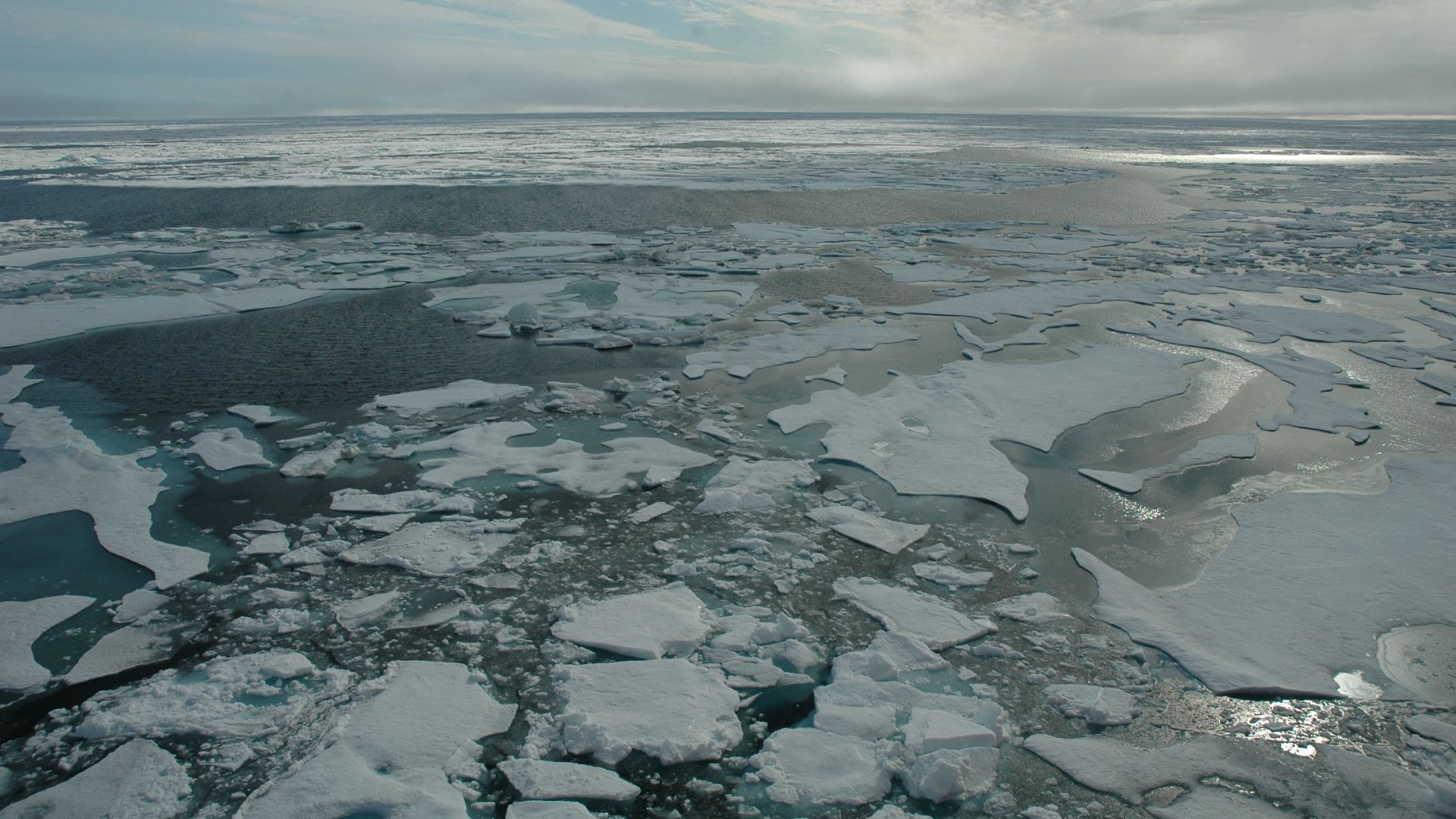
First, let’s set the stage. The Arctic Ocean is warming at an alarming rate, with ice levels declining by over 42% since satellite monitoring began in 1979. Think about that for a moment: nearly half of this frozen ocean is disappearing because of human-induced global warming resulting from burning fossil fuels like coal for energy.
As temperatures rise, we’re heading towards a future where, in a few decades, we could see the Arctic Ocean devoid of ice during the summer months. This melting ice is more than just a big environmental headline—it has real implications for sea levels around the world and the complex ecosystems that thrive in the Arctic.
Frankie Pavia, a researcher at the University of Washington, aptly frames the situation: “If we can project the timing and spatial patterns of ice coverage decline in the future, it will help us understand warming, predict changes to food webs and fishing, and prepare for geopolitical shifts.” But to make those predictions, we first need to look back at how sea ice has behaved in the past.
The Trouble with Predictions
Predicting sea ice levels has always felt a bit like trying to guess the next big blockbuster: it’s tricky and often hit-or-miss. Scientists have struggled to create accurate forecasts simply because there hasn’t been enough historical data to rely on. Without a solid grasp of how historical climate changes affected the sea ice, it’s hard to discern how it will behave in the future.
That’s where cosmic dust comes into play. Every day, we’re bombarded by particles from outer space. Placing a bowl outside for a week can actually capture some of this dust! But why should we care? When the Arctic Ocean is blanketed in ice, that cosmic dust can’t settle on the ocean floor. As the ice melts away, more dust finds its way to the seabed, providing scientists an opportunity to analyze those layers of sediment.
Looking for Cosmic Clues
Pavia and his team set out to collect sediment cores from three strategic locations in the Arctic Ocean. They chose places ranging from near the North Pole, where ice is a constant presence, to regions that were once frozen but had since thawed. The idea was to search for trace amounts of two specific isotopes: helium-3, which comes from cosmic dust, and thorium-230, a byproduct of uranium decay found in ocean waters.
Here’s where it gets interesting: when ice is abundant on the ocean, the sediment ratio of thorium-230 to helium-3 is higher. Conversely, when ice melts and more cosmic dust reaches the bottom, that ratio shifts. Pavia described the challenge well, saying, “It’s like looking for a needle in a haystack.” The quest to unlock the secrets of the Arctic sea ice, it turns out, involves sifting through layers upon layers of sediment.
A Historical Record of Climate Change
The sediment cores revealed a fascinating historical narrative. They chronicled epochs of greater and lesser cosmic dust, mirroring the conditions of sea ice over thousands of years. For instance, during the last ice age, which began around 20,000 years ago, there was minimal cosmic dust settling on the sea floor. However, as the ice started to retreat about 15,000 years ago, evidence of cosmic dust began to rise, revealing a direct correlation between ice retreat and the amount of interplanetary particles settling down.
But there’s more—this study unveiled something critical: the factors governing sea ice levels may not hinge solely on ocean temperatures, as previously thought. Pavia’s group found that atmospheric temperatures play a larger role than expected. If this hypothesis holds true, we might lose Arctic sea ice more rapidly than we ever imagined.
Nutrient Dynamics and Ecosystem Health
But the implications don’t end with ice levels. Pavia’s team also noticed something interesting about how sea ice impacts nutrient availability in the ocean. When there’s less ice, it seems that biological processes consume nutrients more rapidly. They discovered tiny shells from foraminifera—microscopic organisms that thrive in the Arctic waters—preserved in sediment samples. Analyzing these shells revealed how much of the available nutrients were consumed over history.
“As ice decreases in the future, we expect to see increased consumption of nutrients by phytoplankton in the Arctic,” said Pavia. This uptick in phytoplankton growth could have wide-ranging effects on the entire food web, potentially destabilizing fragile ocean ecosystems.
While it’s true that more ice melting can lead to more nutrients circulating and being available to marine life, the increase could lead to adverse effects down the road, such as a collapse of delicate ecosystems. It’s a double-edged sword that highlights just how interconnected our planet’s systems are.
Unanswered Questions and Future Directions
While fascinating, Pavia’s findings pose further questions. For example, why does nutrient availability shift with changes in sea ice? One explanation could be that without ice, there’s more surface area in the ocean for photosynthesizing algae, resulting in an increase in nutrients. However, melting sea ice could also dilute the nutrient concentration, raising the need for further research.
Their study, published in the journal Science on November 6, raises essential questions about how we should respond to climate change. How can we use this information to create better adaptive strategies for species that depend on the Arctic ice and nutrients? And what should policymakers take into account as they draft climate initiatives?
Why You Should Care
You might be wondering—why does this matter to you? Well, the effects of climate change are not just Arctic issues; they ripple across the globe. As populations along coastlines face rising sea levels, food chains are disrupted, and weather patterns become increasingly erratic, this research could help guide better decisions for our future.
Understanding how cosmic dust relates to sea ice levels also tells us that we’re part of a much larger ecosystem. It reminds us that everything is interconnected, and our actions today will have lasting consequences tomorrow. It’s imperative that we pay attention, not just to the obvious signs of climate change but also to the subtler, cosmic threads that weave our climate tapestry.
So the next time you look up at the stars, remember: that dust doesn’t just drift away; it carries vital stories of our planet. It’s a reminder that unlocking these cosmic secrets is essential for navigating the murky waters of climate change.