
The Hjortspring Boat: Unpacking an Ancient Maritime Mystery
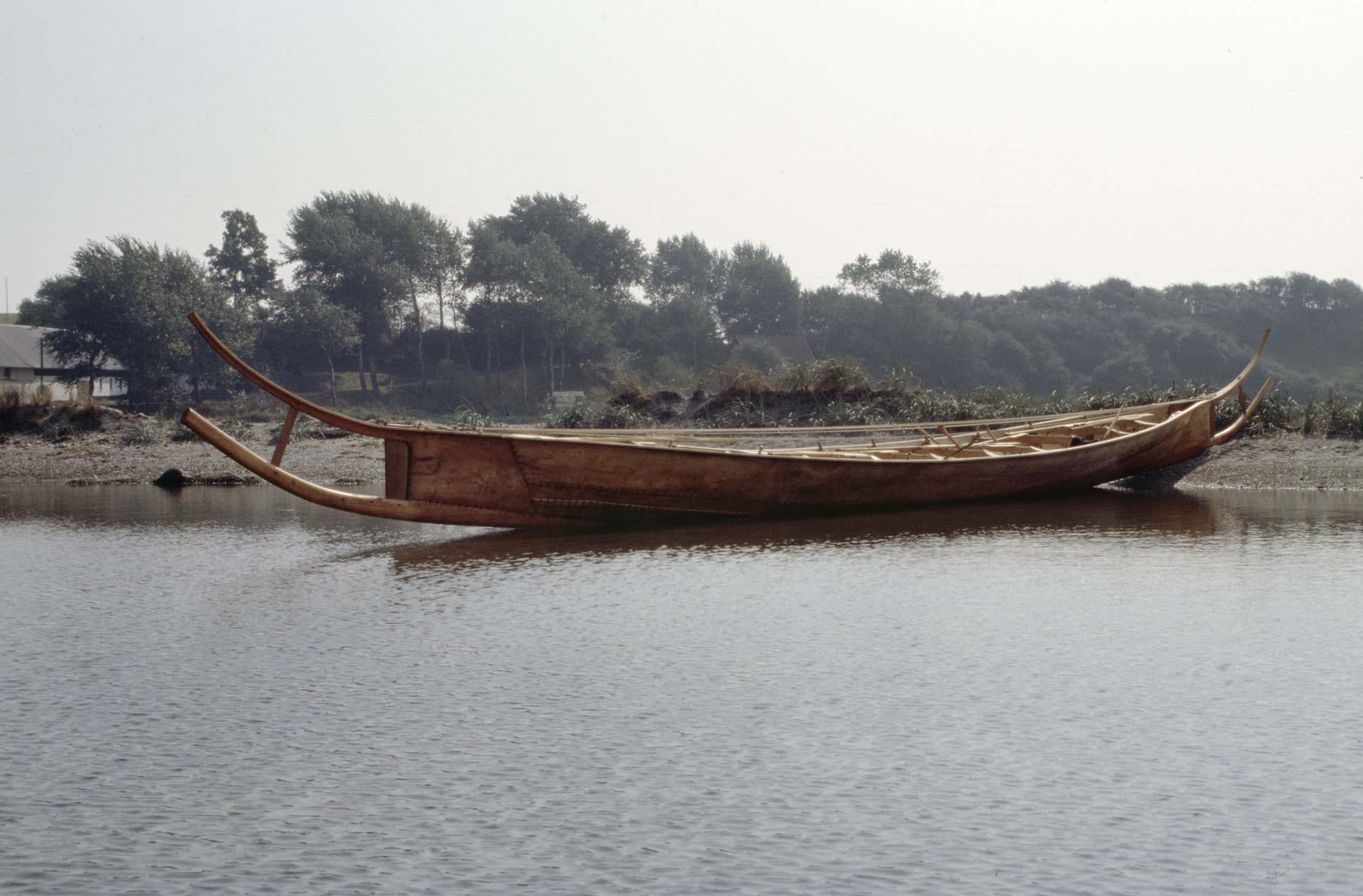
Nestled within the National Museum of Denmark for over a century, the Hjortspring boat has held its secrets tightly. Discovered in an ancient bog in the 1880s, this remarkable vessel dates back to the Iron Age and stands out as the only intact sewn-plank boat ever found in Scandinavia. It’s a remarkable piece of history—used to carry raiding parties of warriors on violent maritime adventures.
But what if I told you that, for all those years, we’ve been missing crucial details about where that boat came from and when it set sail? Excitingly, researchers have recently cracked open this ancient enigma, revealing insights hidden in glue and a fingerprint left behind in its caulking.
A Legendary Raid
Imagine the scene: it’s the 4th century BC, and tensions are high. Several boats, including the Hjortspring, prepare to launch an attack against the island of Als, off the coast of Denmark. The locals—the defenders—stand ready, fiercely guarding their shores. A clash ensues, and the attackers are vanquished, with one of their boats sinking into the bog likely as an offering to some deity.
It’s a storied chapter of history that has puzzled experts. Who were these maritime raiders? What drove them to risk their lives in such a perilous venture? “Where these sea raiders might have come from, and why they attacked the island of Als has long been a mystery,” says Mikael Fauvelle, an archaeologist at Lund University.
The implications of this raid extend beyond historical curiosity. The knowledge and skills required for open-water assaults signal a sophisticated understanding of maritime navigation and warfare. This isn’t just the clash of swords; it’s a testament to human ingenuity.
The Clue in the Glue
So, what exactly led researchers to untangle this mystery? It began with the very materials used to seal the boat—a unique caulking paste. The Hjortspring is a “sewn vessel,” meaning it was constructed from lime wood planks that were tied together instead of hammered with nails. To make it watertight, builders employed a caulking paste.
Researchers took a closer look at this ancient adhesive through gas chromatography-mass spectrometry (GC-MS) testing. What they found was surprising: a mixture of animal fat, possibly lard, and pine pitch.
Now, here’s where it gets interesting. Pine trees weren’t native to Denmark during the Iron Age. This discovery suggests the boat’s creators hailed from a region rich in pine forests. “The boat was waterproofed with pine pitch, which was surprising,” says Fauvelle, highlighting the implications of varied geographical craftsmanship.
With up to six kilograms of pitch required for construction, it seems unlikely that this material was simply traded. Instead, the researchers propose the Hjortspring originated from areas along the Baltic Sea coast—potentially near modern-day Poland or the islands of Gotland and Blekinge.
If true, then the warriors who raided Als were launching their attacks over significant stretches of open water, which brings up larger questions about ancient maritime culture and trade routes.
The Human Touch
Further digging into the boat’s history revealed another fascinating detail. As researchers sifted through the remaining materials, they discovered a partial fingerprint embedded in the caulking resin of the boat—what a find! The ridge width of the print falls within what’s common for adult humans, but there’s no way to determine specific age or gender.
Still, the context enhances our understanding. This print was likely left by a crew member conducting repairs while at sea or a builder working on the construction itself. Can you imagine the stories this ancient worker could tell us?
The research team particularly focused on fragments of a material known as lime bast string. This short-lived cordage would have often needed replacing, making it easier to date. Analysis placed its creation between 381 and 161 BCE, which aligns perfectly with the timeline of the raid on Als.
This study fundamentally alters our understanding of Iron Age society—this wasn’t a haphazard plunder. The evidence suggests that these maritime warriors engaged in careful planning and strategy, indicating a level of logistic sophistication. It wasn’t just battle; it was about resourcefulness and communal effort.
The Impact and Why It Matters
The story of the Hjortspring boat isn’t just a tale of an ancient vessel; it speaks volumes about human tenacity, innovation, and the spirit of exploration. The newly uncovered details challenge preconceived notions surrounding Iron Age societies, dramatically emphasizing their ability to traverse treacherous waters and engage in premeditated warfare.
Why should this matter to us today? In our increasingly globalized world, understanding our historical connections and maritime landscapes can provide context for how trade, conflict, and cooperation shaped societies. It leads us to consider questions about identity, migration, and community in ways that resonate even now.
When I think about the Hjortspring, I can’t help but feel a connection to the resilient spirit of those warriors. They faced the unknown and dared to navigate the open sea—a parallel to many of our modern challenges. Navigating uncharted waters can feel daunting, but this story reminds us that with courage and a well-constructed plan, we can find our way.
In navigating both the past and the present, there’s much we could learn. The Hjortspring is not merely a vessel; it’s a symbol of the human experience—ever braving the sea for survival, conquest, or knowledge. What’s your sail and what seas are you ready to explore?